Wannes Dupont
Both of them expected this to be an awkward meeting, but a necessary one. On 18 September 1951, Margaret Sanger, veteran and pioneer of the global birth control movement, called at an address in Paris’ Saint-German-des-Prés. There, she sat down with the French cardinal Eugène Tisserant, recently appointed as Dean of the College of Cardinals. A political heavyweight inside the Vatican, he was regarded as a potential successor to Pope Pius XII. This meeting on the “world-important problem” of contraception and population control had been brokered by a mutual friend, the American architect and entrepreneur Angus Snead Macdonald. He clearly felt that Tisserant was comparatively open-minded on the subject and might, as he wrote to Sanger, “sometime be in a position to act.”
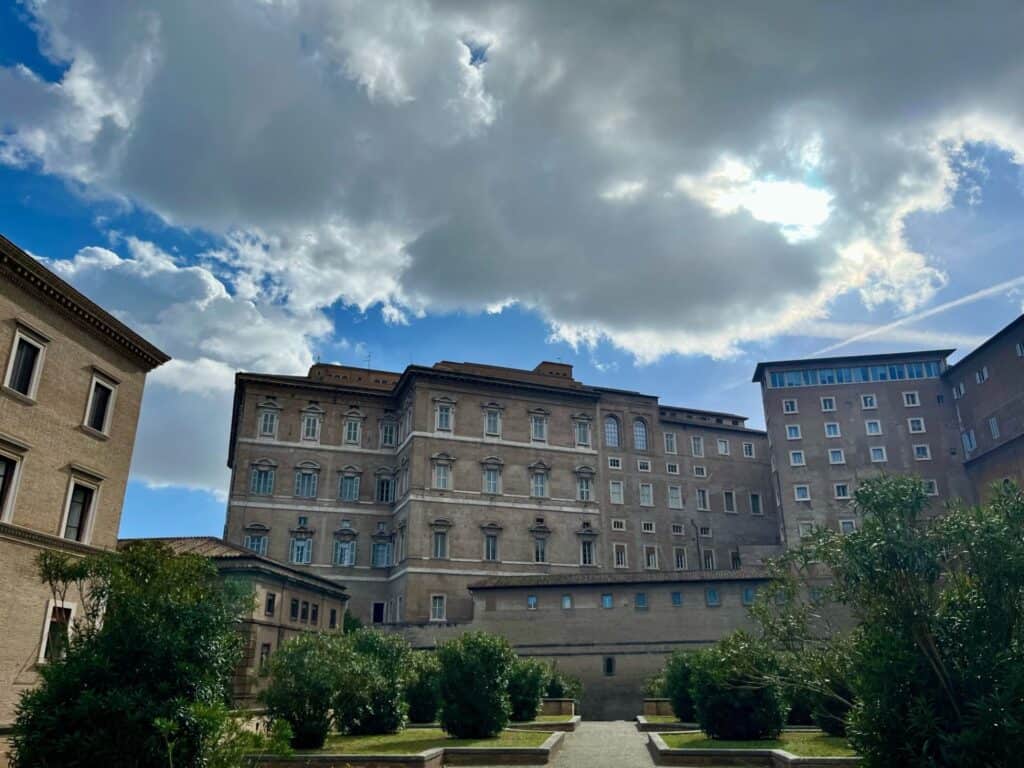
As Sanger had expected, Tisserant did much of the talking initially, insisting that the spectre of overpopulation was overblown, but also conceding that the demographic pressures in American-occupied Japan were dire. To mitigate those pressures, Japan had recently adopted a sweeping liberalisation of abortion with tacit support of the Americans, greatly alarming Rome to the possibility of a wider push for the instrumentalization of human life in the name of economic development. Sanger, who had fought a running battle with the Catholic hierarchy in the US for decades, exercised patience. In part, as she later admitted to Snead, this was because she found the bearded cardinal strikingly handsome. But she had also sensed a promising opening in this top-level prelate. He clearly did not oppose use of the so-called rhythm method among married couples for the spacing or even the limitation of births. Sanger was sceptical of periodic abstinence’s capacity to curb runaway population growth and said so, but she nevertheless realised that the church’s official blessing for the practice would constitute a minor revolution of sorts: a recognition, however limited, that couples had a right to plan their families and regulate their size by the world’s most formidable opponent of birth control.
“It was historical,” she wrote to her close friend and collaborator, the urologist Abraham Stone, straight after the meeting, twice underscoring the word historical. It had been all the more so because, unbeknownst to the cardinal, Stone had recently been asked by the World Health Organization to serve as the scientific consultant of a pilot study on family planning based using the rhythm method which the UN body would be setting up at the invitation of the Indian government as part of the country’s First Five-Year Plan for national development. The situation surrounding this experiment was highly sensitive. The year before, a first attempt by the Ceylonese representative to get the WHO involved in family planning had been deftly crushed by the Vatican. Its Geneva-based lobby had received instructions to ensure that delegates from Catholic member countries voted against any such proposals. Convinced of the urgent need for population control programmes in Asia, however, the militantly atheistic director of WHO, the Canadian Brock Chisholm, had continued manoeuvring behind the scenes. He knew India’s Prime Minister Jawaharlal Nerhu, who had long known Sanger, to be unopposed to such programmes. Nehru’s Minister of Health, by contrast, Amrit Kaur, was a devout Christian. Before his recent assassination, she had also long been the close personal secretary of Mohandas Gandhi. Like Gandhi, who had clashed on the matter with Sanger in the 1930s, Kaur was opposed to all ‘artificial’ forms of birth control, but Chisholm found her open to rhythm and convinced her to seek support from WHO on that basis.
In so doing, Chisholm was trying to placate Catholic opposition. Catholics had been busily discussing the admissibility of rhythm as the only ‘natural’ form of birth regulation since the early 1930s, and there was a growing sense among many of them that the practice would provide some much-needed relief to desperate families amid a global baby boom. How could Catholics oppose a programme based on rhythm only? Sanger warned Stone against allowing himself to be instrumentalised by “big shots” like Chisholm, especially since she believed the proposed experiment was doomed to failure, but Stone felt he had to give it a chance. An affable man by all accounts, he had spent much of his professional life providing marriage counselling in New York City. If rhythm seemed unlikely to alleviate demographic pressures at scale, it could at least prove a start while offering couples who objected to other methods and who were not ready to conceive a way to enjoy marital relations. Moreover, he had received private guarantees from Chisholm that he would not be confined to advocating rhythm alone while on his mission to India.
It seemed like a propitious breakthrough when, only a few days after Stone’s arrival in India, on 29 October 1951, Pope Pius XII officially – if conditionally – condoned rhythm for the first time in a famous allocution to the Italian Catholic Union of Midwives. But the recently available archives of the Vatican for the early postwar years reveal the extent of Stone’s naivety and of Chisholm’s miscalculation. Stone, after all, was the Director of the Margaret Sanger Research Bureau and vice-president of the Planned Parenthood Federation of America. He was hardly someone to instil much confidence among Catholics mistrustful of his mission’s true objective. Soon, alarming dispatches arrived in Rome about Stone’s speeches in India. Domenico Tardini and Giovanni Battista Montini, the two curial officials who ran the Vatican’s Secretariat of State, sprang into action and coordinated with the pope and with the Catholic lobby in Geneva. Once the pair were convinced that Chisholm’s real aim was to use the rhythm experiment as a wedge for WHO to start supporting birth and population control programmes by other methods and on a much larger scale, instructions were issued to block his desgns at all costs. Following several months of feverish scheming on both sides, WHO almost collapsed at the annual World Health Assembly in May of 1952, when, so ordered, several Catholic countries threatened to withdraw from the organisation.
After this showdown, Chisholm was on his way out and contraception would remain anathema inside the UN for a decade to come. The Catholic church had won a major battle in a war it only started losing in the course of the 1960s. By 1968, Pope Paul VI reaffirmed the Catholic ban on all forms of ‘artificial’ birth control in his controversial encyclical On Human Life. Many historians have offered explanations for why he did so in the face of loud calls for reform from within the church. None of these explanations, however, has so far centred on the fact that the church’s ability to block population control programmes at the United Nations, once so formidable, had faltered by that point. A year earlier, the UN had resolved to create a special Fund for Population Activities (UNFPA). Sensing the danger, in 1965 Pope Paul had personally besieged the UN’s General Assembly “not to support an artificial birth control that would be irrational,” insisting that “human life is sacred … even where the matter of the great problem of birth rates is concerned.” The issue, in fact, had been weighing on his mind for many years. Back in 1951, then still as Pro-Secretary of State Montini, he had been the Vatican’s point man in keeping the neo-maltusianismo of Chisholm, Stone and Sanger at bay.
There is a direct line connecting the events surrounding Stone’s 1951 mission to India, the encyclical Humanae Vitae of 1968, the major clash over reproductive rights at the UN’s Cairo Conference on Population and Development in 1994, and today’s ongoing global culture war over sex and gender. If we want to understand our current moment better, that is a line worth tracing back.
Bibliographical Note
Most of the above quotations are drawn from correspondence in the Margaret Sanger Papers held at the Smith College Collections, available via ProQuest History Vault, while the research project funded by a BA/Leverhulme Small Grant draws on a wide range of archives, especially the Vatican’s.


NOTCHES: (re)marks on the history of sexuality is licensed under a Creative Commons Attribution-NonCommercial-NoDerivatives 4.0 International License.
Based on a work at www.notchesblog.com.
For permission to publish any NOTCHES post in whole or in part please contact the editors at NotchesBlog@gmail.com


