Stephen Brogan
In 1980, seventeen-year-old Tim Southgate moved from Kent to central London, determined to live close to the record shop where he had just been employed, DJ Rusty Egan’s The Cage. Rusty was a key player on London’s new romantic scene and a founding member of the electro-pop group Visage, and his record shop was in The Great Gear Market, a post-punk emporium on the King’s Road, Chelsea. Tim’s new job was ideal as it provided access to the latest cutting-edge sounds and to the nightclubbers who purchased them, while he himself started to become a face on the scene. Tim was a slim and very feminine-looking gay man, and, with his bleached hair, glamorous makeup and jewellery, his customers often mistook him for a beautiful, alternative-looking young woman.
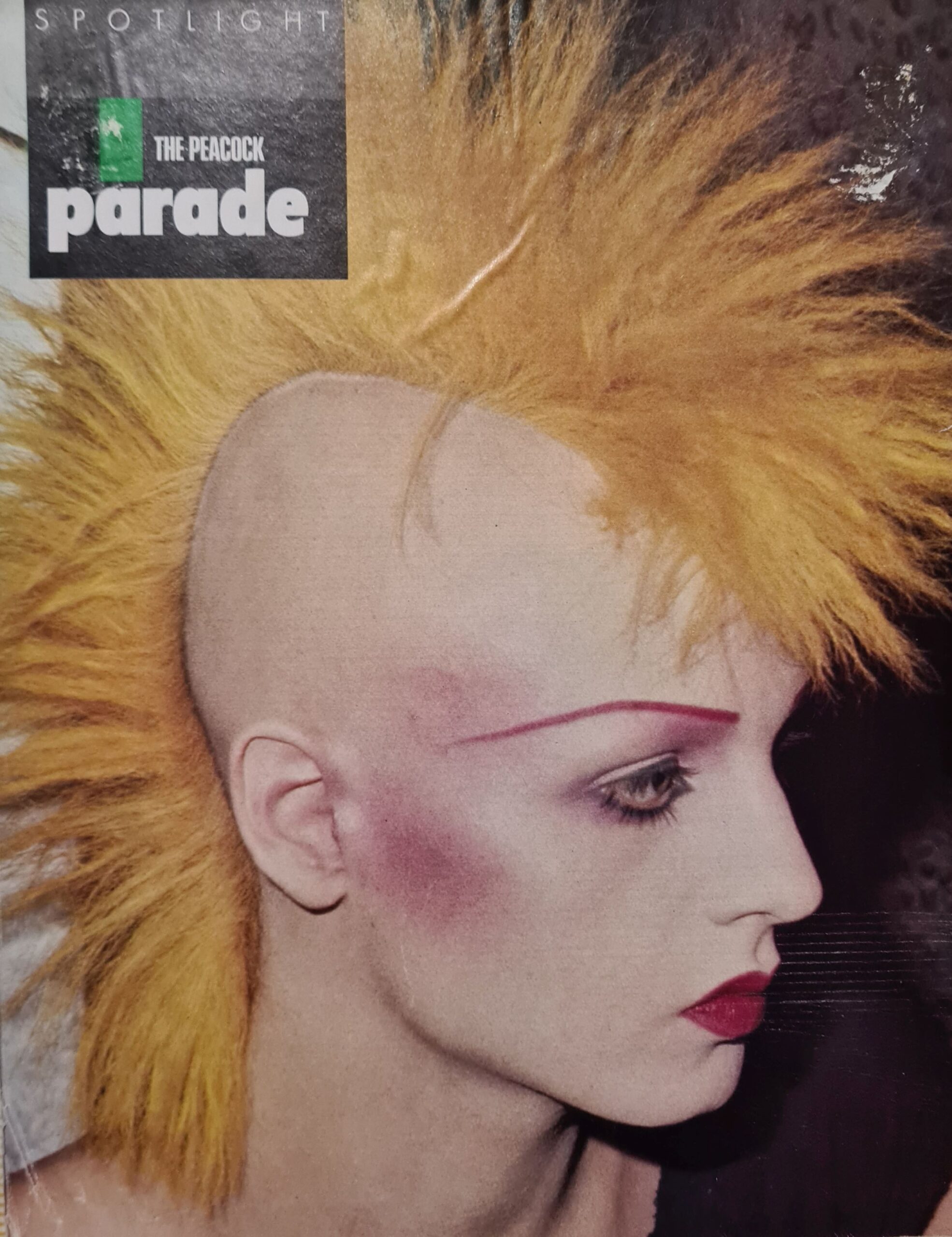
Within two years, Tasty Tim (as he was now known) was a DJ and a doyenne of the capital’s gay and alternative nightlife, renowned for his strikingly androgynous style, a situation that continues to this day. But it was in the early 1980s that Tim and the many other men who cultivated semi-feminine appearances and frequented urban demimondes were labelled ‘gender benders’. The name is best known as a ubiquitous 1980s tabloid insult, first used to mock Boy George (née George O’Dowd, b.1961) and then his fellow gender-bender pop stars. Yet the etymology of ‘gender bender’ reveals an older, more positive history, while an investigation into the young men themselves uncovers a thriving, influential new youth movement of which the compelling pop stars were just the most public component.
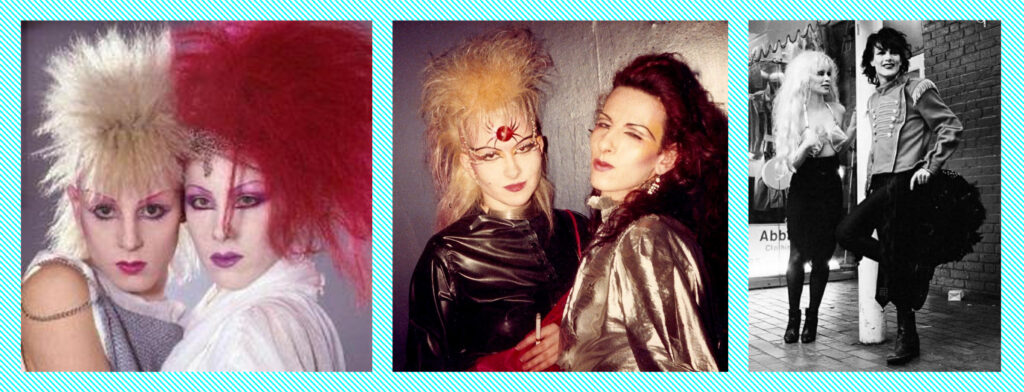
First, though, a definition. Typically, a gender bender was a young gay or bisexual male with a strong interest in alternative music, clothes and nightlife – be it new romantic, goth or new wave — who delighted in wearing female fashions. This sartorial rebellion was particularly evident in dyed and backcombed hair, alluring make up and lots of accessories, all of which disrupted traditional notions of gender and shocked the general public. Gender benders benefitted from their immediate predecessors paving the way for them (the pretty-boys-in-makeup popstars like Adam Ant, Marc Almond and Phil Oakey), as well as earlier punks and glam rock stars, but they distinguished themselves by even higher levels of androgyny (see The Face, June 1983). Gender benders occupied a central place in alternative culture alongside goths, rockers, psychobillies, drag queens, transvestites, and trans people. This was a competitive world in which the way you styled yourself counted for everything, providing endless enjoyment whilst establishing reputations and pecking orders.

London’s new romantic club scene spawned Boy George, and in the autumn of 1982, when he and his band Culture Club had their first number one hit with ‘Do you really want to hurt me?’, the tabloids mocked his femininity. The Sun newspaper came up with the term ‘gender bender’, a slur that quickly became an established label.

Bitchy and catchy, ‘gender bender’ was then applied by the gutter press to the other androgynous male pop stars who had chart success, namely, Marilyn (née Peter Robinson, b. 1962), Pete Burns (1959-2016) of Dead or Alive, and Martin Degville of Sigue Sigue Sputnik. Like Tasty Tim and Boy George, all of them were major players on Britain’s alternative nightclub scene, Marilyn in London, Pete Burns in Liverpool, and Martin Degville in Birmingham. All these men had legions of fans who swelled the gender bender ranks, hence the tabloids also featuring articles on a whole host of lesser-known provincial gender benders (Sunday Mirror, 22 January 1984; see also The Face, May 1983).

Despite the gutter press’s widespread use of the term ‘gender bender’, they hadn’t actually invented it. True, it had only appeared rarely in print prior to 1982, and alas, its oral history is unknown. Originally an Americanism, it was first used positively, debuting in 1975: ‘Why should anyone be made to feel guilty for having mistaken a boy for a girl? Thanks for a beautiful gender bender.’ (Kingsport Times, 26 September 1975). Two years later a review of the outrageous all-male American rock ‘n’ roll burlesque troupe The Cycle Sluts noted that they proudly referred to themselves as ‘gender benders’ (Primo Times, August 1977). The term was then co-opted by the conservative David Egner, whose book The Gender Benders (1981) lamented women’s liberation. If only the masses would return to the Bible, Egner bemoaned, traditional gender roles would reappear, leading to social harmony. Thankfully, the book sunk without trace.

Most importantly from our point of view, in November 1980 The Face ran a review of David Bowie’s album Scary Monsters and Super Creeps, by music journalist Jon Savage, entitled, simply, ‘The Gender Bender.’ This was a new label for Bowie, and an apt one given he had spent much of the previous decade in blusher, dresses and platform sandals. As a moniker it didn’t stick, but nevertheless the term was prescient. Savage praised Bowie’s genius for recreating himself through costume and ‘gender confusion’, which shocked middle England whilst liberating his teenage fans. Some of these youngsters then became gender benders, often citing Bowie’s decadent art-rock of the 1970s as a key influence.

Presumably, the tabloids poached the name ‘gender bender’ from The Face, and then weaponised it for their war on LGBTQ people. This itself is testament, of course, to the vitality of the gender benders. That they were a defining force within urban youth culture is particularly evident in the case of Tasty Tim. He was at the vanguard, each week DJ-ing glam rock and disco at some of the capitals’ best alternative clubs. These included Asylum at Heaven, which showcased pioneering rocks bands such as Bauhaus and Alien Sex Fiend; Scarlett Cannon’s The Cha Cha Club, in Charing Cross, where a young Leigh Bowery cut his teeth; goth club extraordinaire the Batcave, in Soho, where Jonny Slut (née Jonny Melton), the gender-bender keyboard player in the band Specimen, held court; and the Mud Club, on Leicester Square, run by Philip Sallon, whose sequinned saris and candid wit led the press to dub him ‘The Prince of Gender Benders’ (Sunday Mirror, 18 November 1984). As a nightlife figurehead, Tim regularly appeared in the press, discussing music and men in makeup (The Face, July 1983; Vogue, September 1983; Smash Hits, 10 May 1984; i-D November 1984; Andy Warhol’s Interview, February 1985).

Tim’s cult status led to him being signed by Carrere Records, in 1984, as they wanted their own gender-bender pop star. Tim released two cult singles that year and whilst promoting one of them in New York he was awarded the huge accolade of being photographed by Andy Warhol and by David Lachapelle. Back in the UK, Tim appeared in the LWT South of Watford documentary on gender benders, and in the lively daytime TV programme on the same subject.

Like the tabloids, television embraced the term ‘gender bender’. The fashion and style press, in which Tasty Tim often appeared, used it far less, no doubt seeing it as a bit vulgar. Indeed, in the school playground it was abbreviated to ‘bender’ and joined ‘poof’ and ‘queer’ as an insult. But what about the gender benders themselves, what were their thoughts on this new name? They held different views. Tim liked it and reclaimed it, recalling to me that ‘As vile as The Sun newspaper is, “gender bender” was funny, sort of in the tradition of the Carry On films. It became one of my favourite expressions. I was born with one gender and I bent it!’ Jonny Slut recently told me that although these days he thinks that ‘it was a good play on words, with a clear meaning’, back in the 1980s he didn’t like it as he didn’t want to be categorised. Patrick Black has never been keen on the term: ‘We had been dressing androgynously for years before the media eventually caught on’. Aaydium Blaylock has similar views: ‘Gender bender was a sensationalist tabloid phrase … none of us used it to refer to each other as we considered it tasteless.’

These days, ‘gender bender’ is a defunct name. It originated in the 1970s but became mainstream in the 1980s because by then there was a large gay and alternative scene on which young people such as Tasty Tim could congregate and display their experimental appearances. This was a new, post-punk phenomenon and as such required a new label. In the absence of anyone else coming up with one, the tabloids stepped in, commandeering rather than creating a vivid, memorable term. Once the earlier history of the label ‘gender bender’ is appreciated, it provides a counterbalance to its life as a media slur, allowing us to see that as a handle it fits the bill remarkably well.
The author thanks Tasty Tim, Jonny Slut, Patrick Black and Aaydium Blaylock for their help and encouragement with this article, including their generosity in providing photographs.


NOTCHES: (re)marks on the history of sexuality is licensed under a Creative Commons Attribution-NonCommercial-NoDerivatives 4.0 International License.
Based on a work at www.notchesblog.com.
For permission to publish any NOTCHES post in whole or in part please contact the editors at NotchesBlog@gmail.com


