Diana W. Anselmo
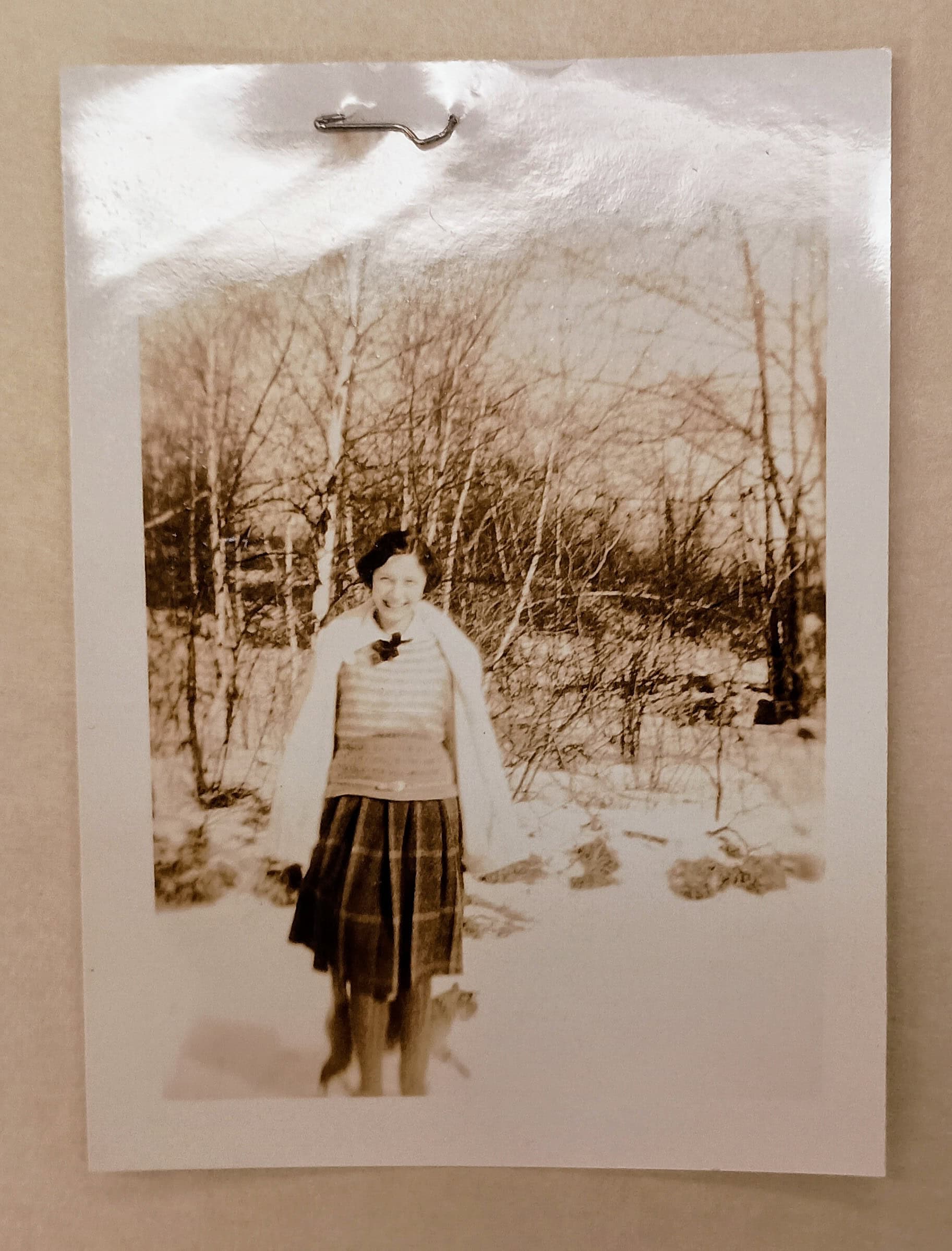
On February 13, 1922, Geneva Jensen of Southborough, Massachusetts, wrote to film star Lillian Gish, “I saw in to-day’s paper that you will be in Boston. […] Is it too presuming of me to ask you to come out […] and to spend the night here? […Mine] is only a small cottage, but I would leave nothing undone to make it comfortable for you. […] Won’t you be my Valentine?”
Bringing to mind contemporary dating practices where pictures are swapped before a tryst, Geneva included a snapshot of herself. A smiling, dark-haired, white schoolgirl in mismatched striped patterns stands in front a copse of bare trees. Behind her legs, a cat trots away impishly.
Such passionate response to film actresses was not uncommon among young female audiences in the silent era. Homoeroticism was central to US film culture in the 1910s and 1920s, the decades that saw the development of a star-driven national film industry. That homoeroticism permeated the early Hollywood star system should not come as a surprise: many high-ranking stars of the period, as well as film reporters, producers, editors, screenwriters, and fans, were young women. In a world of women, queer affinities—from same-sex identification and hero-worshipping to sexual attraction—thrived.
However, the historical knowledge that women have been drawing queer pleasures from commercial media for over a century seems constantly forgotten. Recent cultural debates surrounding the viral success of the Canadian streaming show Heated Rivalry (2025) puzzled over the pleasures female audiences derived from seeing two fictional male hockey players embark on a secret sexual relationship. Created for the Canadian streamer Crave by gay show-runner Jacob Tierney and adapted from Rachel Reid’s men-loving-men (MLM) romance novel series Game Changers, Heated Rivalry has received global attention for its explicit sex scenes as for its impassioned female fanbase. In the US alone, dozens of journalists have pondered why women enjoy making and consuming media content exploring male romance and gay desire. Inspired by a plot point in the narrative, Heated Rivalry also popularized “coming to the cottage” as a shorthand for joyous queer intimacy and yearning. Geneva, clearly, was a century ahead of the gay hockey players.
The argument that (presumably straight, white) women gravitate to gay male content is not new, nor particularly exciting. Scholarship on female fan communities that couple male media characters, like Joanna Russ’s seminal article, harks back forty years. The 1960s television show Star Trek—and specifically the coupling of Spock and Captain James Kirk in fans’ writings and art—is usually cited as the origin point of “slashing,” the slang term used to describe the transformative practice of queering male characters for fan entertainment.
In the coverage of Heated Rivalry’s explosive global fandom much attention was again devoted to delineating audience monoliths and drawing correlations between fans’ preferences and their lived sexual experiences or gender identities, resulting in stultified understandings of what fandom primarily affords its participants: fantasy, projection, escapism, joy. Fandom first takes root in the imagination, in audiences’ psychic and affective real estate. It can, and sometimes does bleed into the physical realm, encouraging fans to see themselves in a mediated performance: to copy a celebrity’s look or mannerism, to work out complicated personal feelings through a star’s oeuvre or biography. As Geneva’s letter shows, fandom can motivate a viewer to reach out to others (fans or performer), seeking to bridge the gap between seen and lived, image and body, things remotely witnessed and things proximally shared. As Geneva reasons after requesting Gish to be her Valentine, “I would never have dared to write to anyone like this but […Lillian,] you seem nearer to me than some of my best friends.”
Media fandom has been affording diverse women the exploration of such queer pleasures since the onset of commercial cinema—the germ of today’s immensely lucrative transmedial celebrity/influencer culture. In my book, A Queer Way of Feeling: Girl Fans & Personal Archives of Early Hollywood (University of California Press 2023), I explore the scrapbooks, letters, and diaries ordinary moviegoing girls crafted in the 1910s as a means to negotiate feelings that colored outside normative lines: same-sex attraction, gender nonconformity, a distaste for marriage and motherhood, a preference for male clothing and athleticism.

Like Geneva’s, these queer fan attachments persevere in the archival margins of the histories we tell about women, media, and pleasure. Some fan mail and scrapbooks from the early silent era are buried in stars’ personal papers; others appear intermittently in online auctions or in film periodicals of the time, like Motion Picture Magazine and Motography. But make no mistake: the reception ardor found in these old archives mirrors that of enthusiastic female fans currently congregating on Reddit, Tumblr, or TikTok to convey heated reactions to fictional hockey romance.
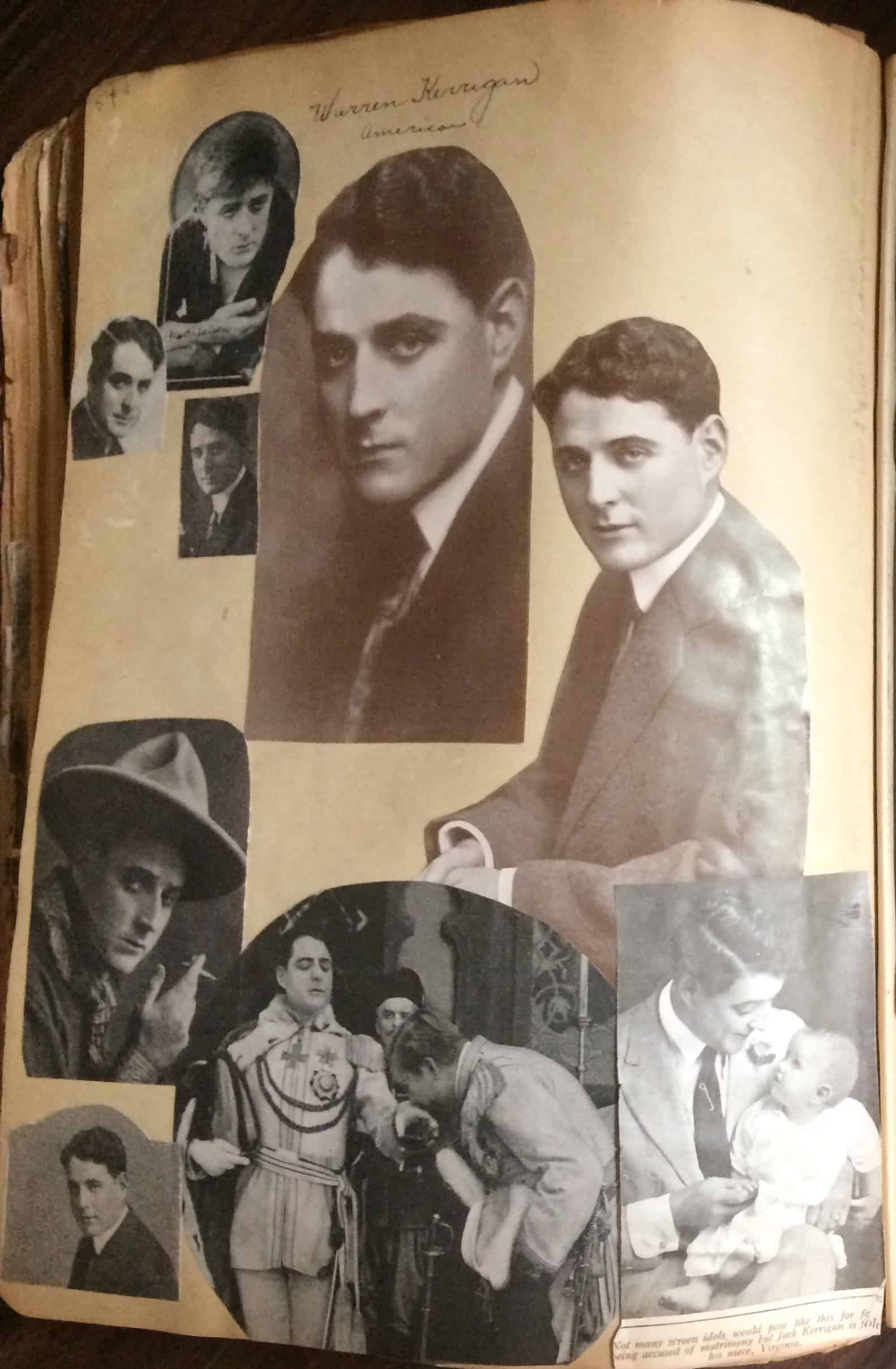
In their silent film scrapbooks, young women queered both male and female stars. Between 1913 and 1915, Eleanor G. Fulton, a well-wheeled Los Angelina, crafted a scrapbook entirely devoted to film idol Jack Warren Kerrigan. Eleanor’s meticulous collages privilege newspaper articles foregrounding Kerrigan’s nontraditional masculinity. Two of Kerrigan’s most salient queer characteristics—a consuming love for his mother and a distaste for female company—are highlighted in her scrapbook. The fan pasted and underlined interviews where the actor declared that “my only interest besides my work is my mother” and where journalists warned that “in spite of his good looks, Warren Kerrigan does not care for girls. He is seldom seen with women; he says he loves the ladies devotedly—and then adds ‘when they leave me alone.’”
Queer rumors attached themselves to Kerrigan as early as 1914, when seventeen-year-old James Carroll Vincent moved in with the star and his mother in their Hollywood Hills estate. Frequently photographed in debonair poses, Kerrigan did not hide his penchant for finery, including fashion, flowers, and high art. Allowances for such flamboyant masculinity eventually fell out of favor in 1917, when the actor spoke against enlisting to fight in World War I. Predating the sexually ambiguous Rudolph Valentino by a decade, Kerrigan would undergo the public trials of challenging dominant notions of red-blooded American masculinity. Fulton’s scrapbook supplies a roadmap to the writing on the wall: early queer whispers, slivers of newspaper pulp quipping that “Jack Kerrigan’s favorite flower is the pansy,” calling him “a great big baby doll,” and announcing that the star was to write a syndicated column “to teach men dress properly,” since he reported having “boys actually mob me to get my handkerchief away for a souvenir.”
Kerrigan’s dissidence from the conventional he-man stereotype charmed both male and female film fans. Fulton clipped verses penned by male fans that gushed with homoeroticism. In 1916, William De Ryee, from Santa Cruz, California, wrote to Motion Picture Magazine to crown Kerrigan “the player of my heart.” He listed the leading man’s physical attributes with rousing approval: “And talk of being handsome—he’s living Belvedere! / With dreamy eyes, whose wistfulness had made him e’en more dear.” The poem concludes with possibly one of the first fandom instances of a deflecting “no homo:” De Ryee hurriedly asserted, “Of course, ‘I love the ladies,’ but commend I must this man; / This peerless Sovereign of the Screen—J. Warren Kerrigan.” The scare quotes around the fan’s disclaimer of virile heterosexuality are perhaps as damning as his swooning over Kerrigan’s “dreamy eyes.”
Like many current female fans, Eleanor seems to have found the queerness suffusing Kerrigan’s star text not a deterrent, but a driving force of her fan attachment, stimulating the moviegoer to follow, document, and eventually meet the actor in person. Eleanor’s collages also spotlight the emotionality of Kerrigan’s acting and the feminized vulnerability of his body, selecting stills where the star languishes in bed, lounges in silk pajamas, touches other men, or is long-haired and skirted as Samson in the 1914 biblical film.
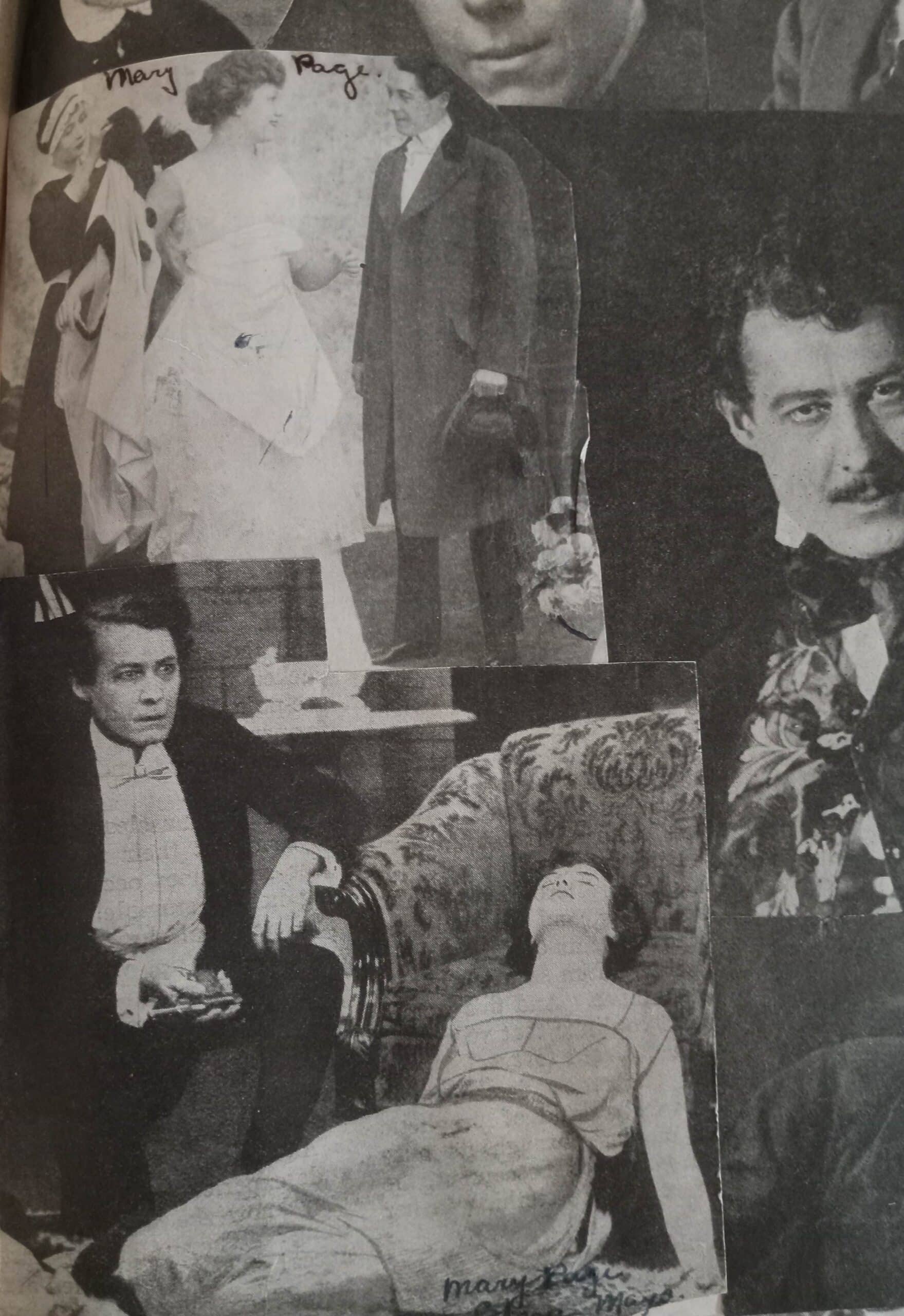
Working-class Alice E. Shefler from Portland, Oregon also used scrapbooking to queer her film reception. From 1915 to 1917, her sixteenth and eighteenth birthdays, Alice produced dozens of collages dedicated to US actors, including a four-image shrine to Edna Mayo, who starred in the popular 1916 serial The Strange Case of Mary Page. One of the images Alice clipped shows a maid helping Mary Page/Mayo with her evening gown. The two women stand close together, their bodies caught in the act of domestic intimacy. Neither of them faces the camera; the maid is transfixed by her lady’s motions, and Mayo looks forward smilingly. The image, as the teenage fan preserved it, simmers with homoerotic innuendo: two young women huddle in a boudoir and avoid the camera’s voyeuristic gaze, while one of them partakes in either dressing or undressing the other—the direction of the act is left unclear.

On a later page, this promotional still returns, only now a man faces Mayo. It becomes clear that the original image included Henry B. Walthall, Mayo’s leading man in The Strange Case of Mary Page. By scissoring him out of her earlier collage, Alice created a moment of sapphic intimacy through fan reception, one that persists to this day (I own her scrapbook as well as Eleanor’s. They both live in my closet).
Alice, like Eleanor, scoured commercial film ephemera for images of nontraditional masculinity and male homoeroticism. In a collage devoted to Harold Lockwood, another heartthrob of the 1910s, Alice chose to collect movie stills in which the actor interacts with other men. In one image, Lockwood holds intense eye-contact with a young officer, the man’s hand covering Lockwood’s in a tight grip. Their facial expressions thrum with such tension the exchange blurs the lines between homosocial and homoerotic, a threat and a come-on. In another film still, Lockwood appears among working men who cheer as he is patted on the shoulder by an older officer on horseback, a female child secured between his thighs. The image celebrates rugged masculinity while presenting a picture of male bonding centered in an alternative family configuration. Again, without context, this fragmented scene from The Buzzard’s Shadow (1915) presents a community of men physically reassuring each other and nurturing a child without any adult female presence to signal heterosexual romance or reproduction.
Female moviegoers like Alice and Eleanor favored queer possibility over heterosexual content. They sought out implied same-sex attraction in film glances and touches captured in promotional stills. It is significant that Alice foisted so much attention on scrapbooking images of Lockwood with other men when most of the star’s promotional images showed him next to May Allison, his onscreen sweetheart. This deliberate type of reception reveals early stagings of female fandom scavenging for representations of male/male intimacy on the silver screen.
This reading is strengthened by myriad other stills Alice collaged, all depicting “pretty boy leads” being physical with each other, including Kerrigan having his hand kissed in A Son of the Immortals (1916); a sketch of shirtless Thomas Santschi fist-fighting another half-naked man; and Owen Moore, in a small still from Betty of Greystone (1916), entangled with another man on the floor, their limbs so intertwined their two bodies cannot be told apart. This is an unusual still to choose from a long melodrama starring Dorothy Gish, especially because both men’s faces are obscured, foreclosing star identification or optimal handsomeness. With the added context of Alice’s broader scrapbooking proclivities, the emphasis on homoerotic male intimacy—on strapping masculinity turned on itself in a simulacrum of wrestling or lovemaking—likely drove the inclusion of this grainy film still.
Queerness attracts queerness. Perhaps seeing a debonair actor play against the he-man type appealed to female spectators who identified as “different from the norm” because such star texts gave visibility to fans’ divergence from heteronormativity. Perhaps some women moviegoers enjoyed seeing men being physical with one another because masculinity was attractive to them. Perhaps pleasure resided in witnessing male homoeroticism sidestep, no matter how briefly, traditional gender and sexual binaries that tended to cast female characters as narrative trophies or ornaments.
The “why” is less compelling to examine than the “when” and the “how.” The latter especially has changed little since the beginnings of transmedial celebrity culture, of which Hollywood star cinema was a pioneer and Heated Rivalry a distant cousin and direct beneficiary. Literate female audiences have been deriving pleasure from queering mass media for over a century, hunting the screens and promotional content for representations of male homoeroticism, gender nonconformity, and sapphic intimacy. Female audiences wanted film actresses to come to their cottage in 1922 and they delight in seeing fictional hockey players go to their cottage in 2026. In fan reception history, queer joy never needed a “why”—a “how” more than sufficed.


NOTCHES: (re)marks on the history of sexuality is licensed under a Creative Commons Attribution-NonCommercial-NoDerivatives 4.0 International License.
Based on a work at www.notchesblog.com.
For permission to publish any NOTCHES post in whole or in part please contact the editors at NotchesBlog@gmail.com


